
When one of your electronic components reaches end of life, don’t assume the nearest available replacement or a last-time buy is automatically the sensible answer. A contained, well-validated patch may keep a mature product in service.
If the change reaches core functionality, firmware, PCB layout, certification or your product roadmap, it may be time to re-engineer instead. The decision needs a clear plan from procurement, engineering and the product owner, together.
⏩ TL;DR
- A component that looks like a direct replacement can still change enclosure fit, thermal behaviour, switching performance, reliability, compliance testing or firmware work.
- A last-time buy can protect your production while a transition is completed, provided the quantity comes from a real demand and service plan.
- A patch suits contained changes with a credible alternative.
- A redesign becomes more sensible when a core module, MCU or product architecture is affected.
- Procurement, engineering and the product owner need to share the evidence and agree the route early.
Table of Contents
Component obsolescence rarely arrives at a convenient point in your product’s life. You may have customer commitments, a service obligation for an installed base, and just enough stock to keep the line moving for a few months. Then a PCN or end-of-life notice lands.
Three routes after an EOL notice
A "drop-in" replacement can change more than the BOM
Why an apparent drop-in replacement may fail
Package height
Hover to check
Same footprint, different component height, it may not clear your enclosure.
Footprint / pinout
Hover to check
Pad layout or pin order may not align exactly with the original.
Thermal profile
Hover to check
Different heat output can affect enclosure design and derating.
Switching / timing
Hover to check
Input capacitance can shift turn-on and turn-off behaviour.
Firmware
Hover to check
Drivers, registers or timing may need code-level changes.
EMC / certification
Hover to check
PCB and RF changes can trigger a re-certification cycle.
A specification match is a starting point for evaluation, not proof of equivalence.
This is one reason to link component decisions to production-ready BOM management. A useful BOM records more than an approved manufacturer part number. It needs lifecycle status, supplier information, qualified alternatives and clear revision control.
A controlled patch can improve a mature product
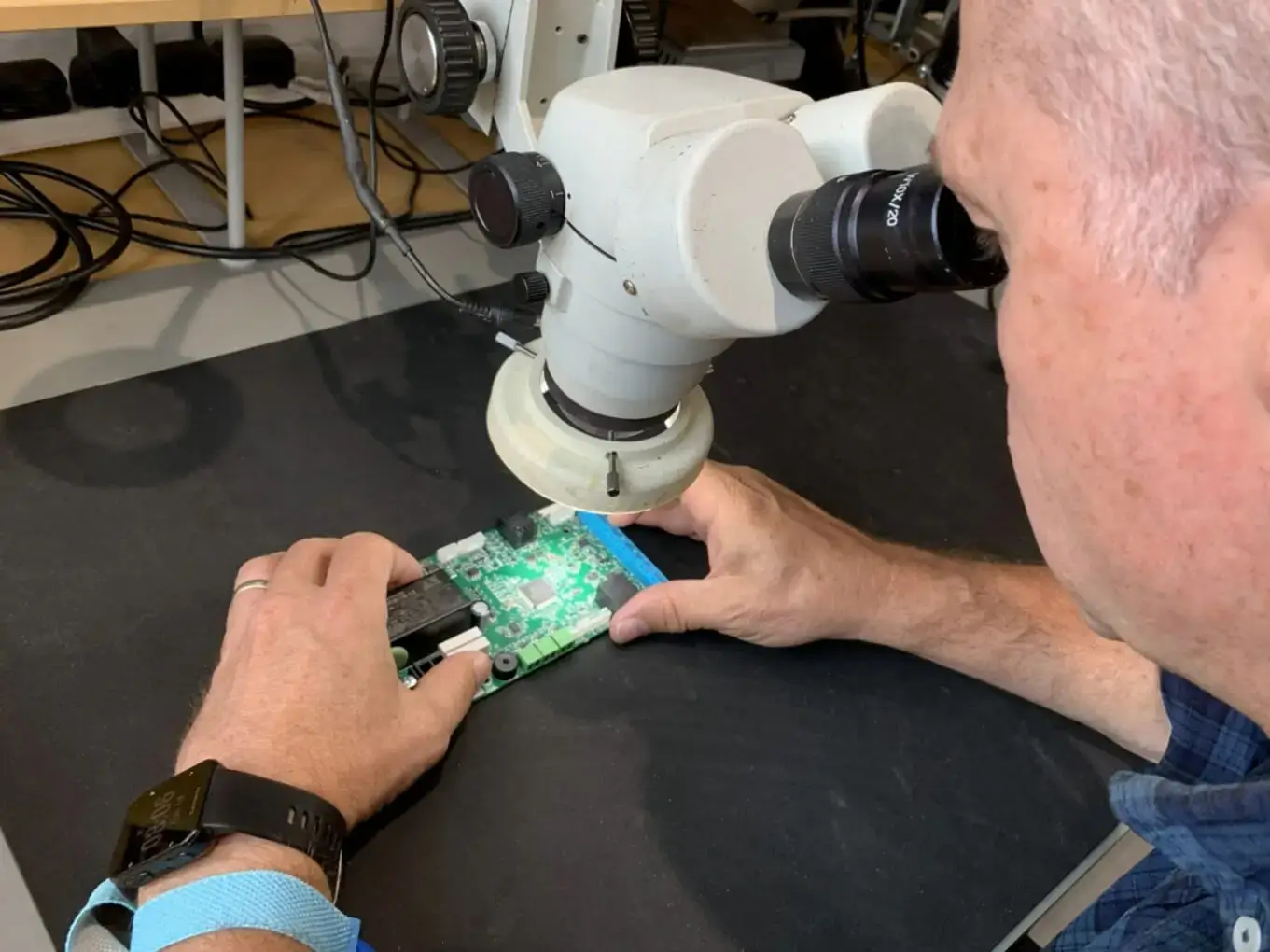
One of our clients, a battery-powered security product manufacturer, needed attention when its power-supply component became obsolete. The affected circuit was sufficiently contained that we didn’t need to rebuild the full product or change its embedded software.
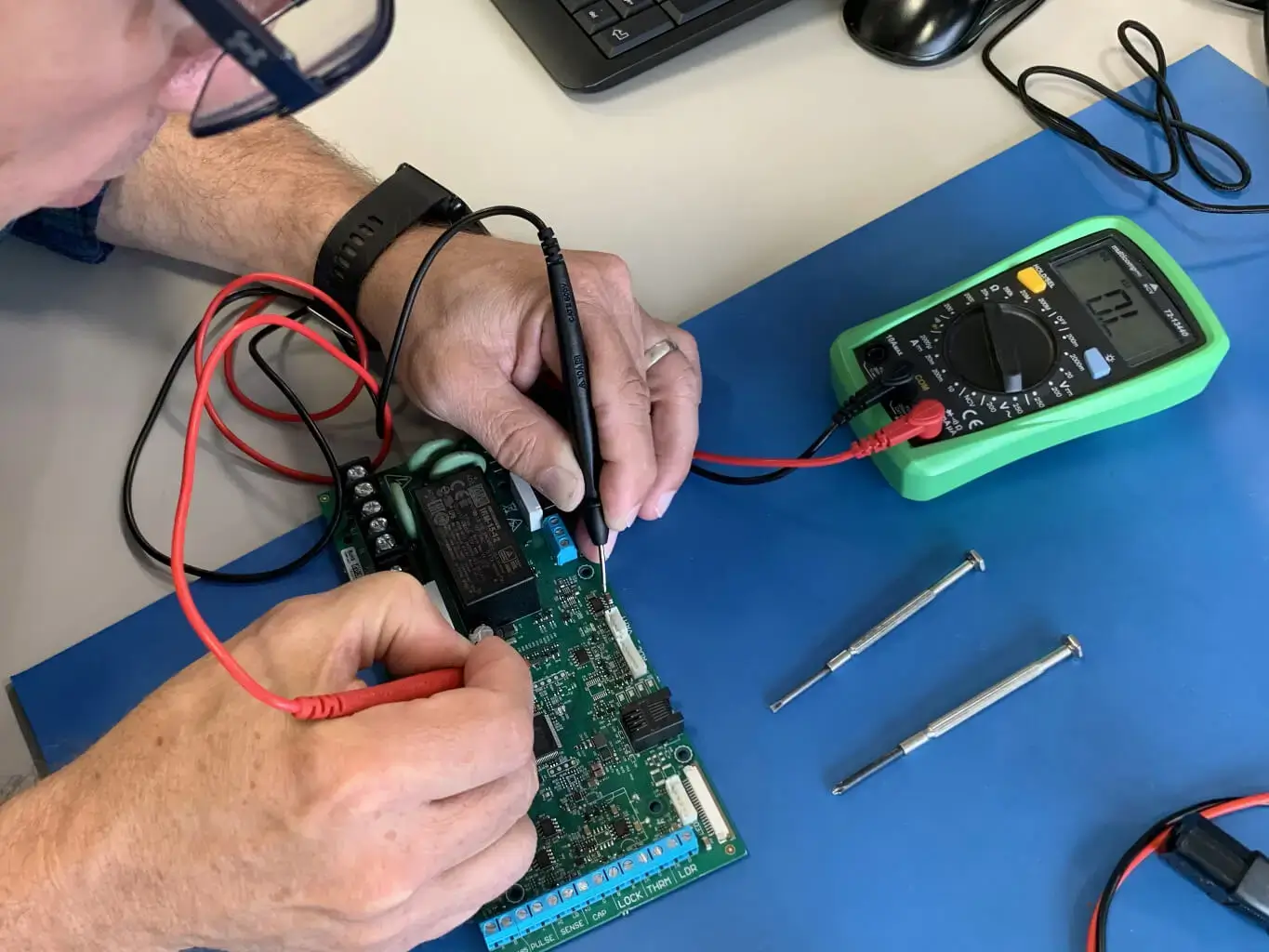
We assessed the replacement against current, voltage, wattage and thermal requirements, then tested the resulting power profile. The new solution ran cooler and reduced sleep-mode current to around 75% of the previous design, extending the product’s battery life by roughly three years before replacement was needed.
The work still required validation and recertification. It wasn’t a case of swapping one chip for another at the production bench. A wider re-engineering programme would have added software and broader design cost without solving a problem in the core product architecture.
That’s a useful shape for a viable patch to follow: a contained technical change, a credible validation route and a clear reason to preserve the existing product.
Re-engineering can remove a larger risk
Another client, an industrial product manufacturer, faced a different situation when its combined wireless module and modem reached end of life. The obsolete module contained core control and connectivity functions. Only limited parts of the existing design could be retained, so a narrow component substitution wasn’t realistic.
We re-engineered the product around a new approach. The updated design achieved roughly 8% more wireless range and allowed a smaller board and enclosure, creating a cost-saving opportunity. The manufacturer used a last-time buy to continue building the existing version while the redesigned product went through development and testing.
The last-time buy had a defined job. It kept supply moving while the new product was made ready. It didn’t replace the redesign decision.
For projects where a component change has already stalled development or production, our electronics and software design rescue service can help establish the technical route and a realistic delivery plan.
Where your product needs a wider lifecycle update, our electronic redesign support covers the hardware and embedded software work together.
Last-time buys need a defined purpose
Last-time buy has a place in obsolescence management. It can protect your customer supply, maintain service commitments and give your team the space to complete validation properly instead of rushing a replacement into production.
It needs a plan. Start with expected remaining demand, service stock and a sensible risk buffer. Then test the figure against the credibility of the patch or redesign timetable, the component’s storage and ageing characteristics, supply assurance, forecast uncertainty and the possibility of programme delay.
A simple starting calculation is:
Last-time-buy quantity = remaining demand + service stock + reasonable risk buffer
That calculation shouldn’t be driven solely by the budget available this quarter. Buy less than required and you can leave your team exposed before the replacement route is ready. Buy too much and you create ageing stock, write-offs and cash tied up in parts that no longer fit your commercial plan.
Read our guide to managing component obsolescence for further detail on lifecycle planning, alternatives and last-time-buy decisions.
A note on current lead times
If you’re finding lead times worse than usual as of late 2026, you’re not imagining it.
Passives that would normally ship from stock are pushing out to 8 to 10 weeks, and some silicon has moved to lead times of several months.
Two factors are driving this: manufacturers have been drawing down inventory built up over previous years and are producing less as a result, and military demand is taking priority allocation ahead of industrial and commercial orders.
Rising demand for RAM and DRAM from AI data centre build-outs is adding further pressure in specific categories.
Build extra headway into your last-time-buy and redesign timetables while these conditions persist.
Procurement needs three answers from engineering
1. Which product or products are affected by this specific component’s end-of-life status? One component can appear in several products, product revisions or service assemblies. Identify the full exposure before deciding on stock or engineering effort.
2. How long will it take to find a replacement and confirm it is fit for use? Include technical investigation, design work, testing, documentation and any certification cycles. The sourcing lead time is only one part of the schedule.
3. Do we need a redesign, patch or replacement route? The answer needs an impact assessment. It should cover the part’s role in the architecture, the available alternatives, product lifecycle, testing burden and commercial value of a wider update.
You can speed up that assessment by bringing the right information to engineering:
- Demand forecast and installed base
- Service commitments and customer obligations
- Current stock, open orders and approved sources
- Manufacturer EOL date and last-time-buy deadline
- Lead times and availability evidence
- Target product lifetime and any active product roadmap
Engineering can then assess technical suitability, test requirements, compliance implications and implementation time. Your product owner brings the market view: demand, commitments and whether the product should remain as it is or move to a new revision.
The product owner drives the decision
Urgency matters. It shouldn’t replace planning.
Procurement is accountable for supplier information, possible alternatives, availability, last-time-buy quantities, comparative component cost and supply risk. Engineering is accountable for the technical effect of the change, including suitability, testing, compliance and programme duration. Your product owner drives the decision because the outcome affects the product’s future in the market.
That owner may be a product manager, product specialist, commercial lead or another person responsible for the product line. Their role is to bring the business case together, then make sure the agreed route doesn’t drift.
For regulated equipment, have this conversation early. Medical, ATEX, aerospace and other safety-related products can require longer certification cycles and more formal evidence for a change, and the PCB design requirements differ between consumer, industrial and aerospace products in ways that matter when you change a part. A last-time buy may be necessary to cover that period, but it should sit alongside a credible route to validation or redesign.
Who owns what when a component goes obsolete
| Decision area | Procurement | Engineering | Product owner | Quality / Reg.* |
|---|---|---|---|---|
| Component data | ||||
| Demand exposure | ||||
| Technical feasibility | ||||
| Compliance route | ||||
| Last-time-buy plan | ||||
| Final decision |
*Quality / Regulatory: medical, ATEX, aerospace or other safety-related products.
When a patch has become a redesign
- Extensive firmware or board-support-package changes
- A replacement wireless module, modem, MCU or other component central to product function
- Material PCB, antenna, enclosure or interface changes
- New production test equipment or multiple validation cycles
- Significant recertification requirements
- A product roadmap that would benefit from a better platform, smaller enclosure, lower power use or reduced component risk
There’s no universal line where a patch becomes a redesign. Your product’s lifecycle matters. The cost of a controlled patch may be appropriate for a mature product with known demand. The same work may be poor value if your product needs a platform refresh within the next year.
A clear plan from the outset gives your team a better chance of avoiding a rushed decision later.
Don't guess. Get an impact assessment.
FAQs
What is component patching?
Component patching is a limited, controlled design change intended to replace an obsolete or constrained part while preserving the wider product design. It still requires engineering assessment and may need PCB changes, validation, documentation and recertification.
When should you redesign an obsolete electronic product?
A redesign is worth assessing when the obsolete part is central to the product architecture, no credible alternative exists, or the proposed patch would require broad PCB, firmware, enclosure and compliance changes. It can also make sense where the product has years of commercial life and the update can improve cost, performance or supply resilience.
Is a last-time buy a good way to handle component obsolescence?
It can be, provided it bridges a defined transition plan. The quantity should cover remaining demand, service stock and a justified risk buffer. You also need to consider storage life, demand uncertainty, supplier assurance and the time required to complete the replacement or redesign.
Does a component replacement always require recertification?
No single answer applies to every product. Requirements really depend on the nature of the change, the applicable regulations and standards, and the product’s certification route. Treat compliance as part of the initial impact assessment rather than a late-stage check.
What information should procurement give engineering after an EOL notice?
Start with affected products, demand forecast, installed base, customer and service commitments, current stock, approved sources, EOL and last-time-buy dates, lead times, target product lifetime and roadmap information. This gives engineering enough context to assess the right technical route.
Does a component replacement always require recertification?
No single answer applies to every product. The requirement depends on the nature of the change, the applicable regulations and standards, and the product’s certification route. Treat compliance as part of the initial impact assessment rather than a late-stage check.

With over 30 years of experience in electronics design and manufacturing, Conrad brings a wealth of knowledge to the ByteSnap team. His extensive career has spanned diverse industries, including the petrochemical, industrial, security, and commercial sectors.
Previously, Conrad’s entrepreneurial spirit led him to establish and manage his own PCB population factory in South Africa. This hands-on experience deepened his understanding of the intricacies of electronics manufacturing.
Conrad’s decision to join ByteSnap was driven by his desire for continuous growth and the opportunity to work with a UK-leading electronics design house. He says, “Working at ByteSnap is interesting, challenging, and completely enjoyable.”
Away from circuits and components, Conrad enjoys exploring new places, museums, and football.
Expand your knowledge
- ByteSnap Design: BOM Monitoring Service and Obsolescence Management as a Service
- ByteSnap Design: How to manage component obsolescence
- ByteSnap Design: How to create a production-ready BOM
- ByteSnap Design: u-blox cellular exit: how to save your IoT product
- Electronic Components Industry Association (ECIA): industry information on authorised component sourcing and supply-chain practice